

Live Life to the Fullest: 3 Lessons from The Abundance by Annie Dillard
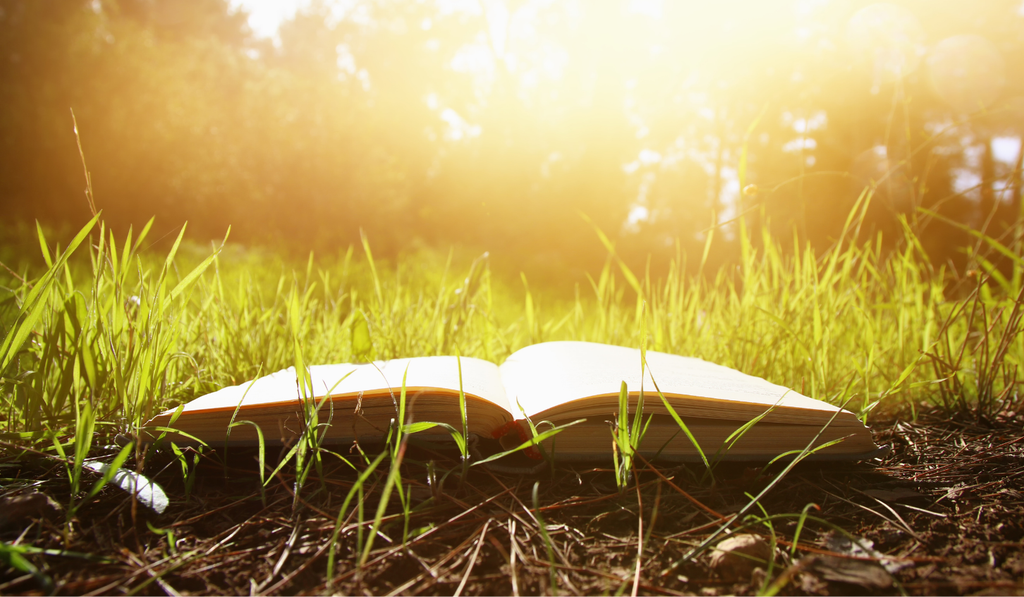
Theme #1: Looking (A Mindfulness Practice for How to Stay Present)
The first theme that arose really loudly for me was that of looking or “seeing”. Truly seeing the world that is with you and around you is a skill that fewer + fewer people practice nowadays. We react to notifications, dings and interruptions as opposed to actively being present with the world as it is with our full embodied senses, our seeing. In a lot of ways, this is Dillard’s own version of a mindfulness practice — long before anyone was branding it that. And, while this theme comes to the surface in a very obvious way in a couple of the essays, I would say simply the way Annie Dillard writes is a reflection of this ability to be with the world through seeing, paying attention. Her work makes that clear — that this is someone who is seeing. In a similar way to Mary Oliver’s work, for instance. It’s clear that this is someone who knows how to be outside, with the world, and with themselves.
This is a question I’m very interested in with my life, but also an ongoing question with creating + writing — can I craft as someone who sees, as a seer? And I would say Annie Dillard does that. And we can see evidence of this in so many ways throughout the collection.
Seeing Is Being Here
In the essay Seeing, there is an invitation to be here, really be here, be present to the life that is happening right now. Be here for it. Though you can’t see everything… See everything that is here. Seeing is being here.
Dillard’s advice here, boiled down: don’t look away from the world. Meet it the way you’d meet a worthy opponent: eyes open, fully engaged, refusing to be the one who looks away first.
She tells a story about watching a mockingbird free-fall straight down the side of a four-story building — and then, just before it would have hit the ground, unfurling its wings with total precision and floating safely onto the grass. No one else was there to see it happen. Her point: beauty and grace occur whether or not we’re watching. The least we can do is be there for it.
Trying to be there and being here by seeing what is happening around us because beauty and grace are happening… but probably not on the phone as we zombie down the sidewalk. That person doesn’t see it because they’re not looking. A reminder that life is less about being productive at every second and more about being present and watching the world, admiring it for still being with us.
Seeing Simplicity
Another element of this seeing is Simplicity — the willingness to be more easily in awe, and that simplicity is a gateway or a lens through which we see the abundance of the world around us. And returning to wonder, an awareness that much of what life is doing is pure awe if we can see with enough simplicity.
She describes cultivating a kind of healthy poverty and simplicity — the sort where finding a stray penny on the sidewalk genuinely makes your day. Because the world, she points out, is quite literally scattered with pennies everywhere, if you’re paying attention. What you see is what you get.
I love re-framing this phrase we say so often : “what you see is what you get.” If you see the world full of shining pennies, then you see the shining pennies everywhere… “what you see is what you get.” And if you have cultivated the openness to be alive to that, you will see it. It reminds us of the power of perspective and how it is we receive what we see. With what spirit or attitude we see the world around us very much determines what we think we are getting, and how much we get.
It’s an interesting prompt to cultivate enough poverty and simplicity in one’s self to see abundance at every turn… maybe that is a true perspective of Abundance — that it’s already here. and what you slow down enough to see is what you get.
She later describes nature itself as a kind of now-you-see-it, now-you-don’t affair — a fish flashing and vanishing back into the water, a deer seeming to disappear into the trees, the brightest bird fading into leaves. These small disappearances, she says, stun her into stillness. Nature reveals as much as it conceals; so does the way we’re able to see it.
Loving Is Seeing
She also speaks about who can see … she says…
“The lover can see, and the knowledgeable.”
The dominant ways my culture interacts with information- attention tends to mostly prioritize the knowledgeable sight. And there’s nothing wrong with knowledge.
But this pause, this line….
“The lover can see, and the knowledgeable.”
Reminds us that loving something is also its own sight. When we watch something or see someone through the eyes of love, or as a being we love, a place we love, a being-alive we love.., sure there’s bias there… but love is also sight. And we can only really see from where we are, there is no objective, omni-awareness. Our knowledge is also biased. We can only truly see things from where we are, how we are and who we are and would it behoove us to lean into the sight that love brings to our vision? And how that love is an equally valuable way of knowing. A reminder that you don’t have to have a degree in something in order to truly see and understand it. That knowledge doesn’t have to exclude you and love can grant the same access to sight.
She turns briefly to biology here — noting that our brains are constantly editing raw sensory input before we’re even aware of it, cutting and splicing what we perceive. Simpler organisms, she points out, don’t have that filter; in a strange way, they may be the only ones perceiving reality exactly as it is.
Again… a flag back to that simplicity.
She closes this section with a question rather than an answer: once you’ve truly witnessed an ordinary, fleeting piece of what’s real — time itself moving through us — then what?
Theme #2: Making (Embodiment Practices for a Life You Actually Inhabit)
Which leads us to the second dominant theme of the book from my perspective. If we can see with simplicity with loving and with presence… then what? Then, we make. The abundance of the world that we see, when we truly see, then we do something with it. We make.
In the middle of the book is an essay on “The Writing Life— A Writer in the World.” And Dillard’s advice about writing might as well be advice about living. It really lights up the middle of the collection.
Her core advice on writing, boiled down: spend everything you have, right away, every time. Don’t save your best material for later — give it now, all of it, freely. The impulse to hold something back isn’t wise, she argues; it’s destructive. What you don’t give away freely becomes lost to you entirely. You open the safe later and find only ashes.
A truly abundant perspective indeed.
And that maybe we are to make things with what we see, from what we see, and that is an abundant life. To embody the making, our making, which is how we inhabit what we see. Maybe that’s making something as difficult, impossible or beautiful as a chert knife or making something as difficult, impossible or beautiful as a meaningful life of abundance presence.
She compares finding your calling to the instinct of a weasel — not attacking or forcing anything, but yielding completely to the one true pulse of your own nature.
She brings us more advice on writing that sounds a lot like advice on living…
Your calling, she says, starts with whatever strange thing quietly fascinates you — something you’ve never read on any page, for a reason you can’t quite explain. That’s where you begin: giving voice to your own astonishment.
On the next page she says…
Then comes the gut-punch: write as if you were dying, she says — and assume your only audience is made up of dying people too, because, in truth, that’s exactly who you’re writing for. What would you say to someone if you knew triviality would enrage them?
For fun, I recommend you go back to this line and exchange the word “live” and “living” where it says “write” and “writing.”
And that it is an embodied making because, remember, we are seeing… here. In the chapter about writing, I loved the description of the art entering the body… that basically the body has to learn the tools of the medium it is using. As a dancer, of course, this makes a lot of sense to me.
She recalls an old expression from working-class France, where an apprentice’s exhaustion or injury was described as the trade itself moving into his body. She extends that idea to painting — a painter can’t simply apply paint the way you’d use glue or screws to fasten something down. The tools only work once the artist’s own neural pathways have physically reorganized themselves around the medium, cell by cell, to make room for it. It’s the same principle I lean on with clients in somatic coaching — the body has to learn a new pattern before the mind can really trust it.
Embody the making. Embody the making. Let the making, the tools, the medium change you. Be the making. You are here to make… your calling. On some level we can’t help it but we can help what and how we are seeing and how we embody the medium to make.
And we’re not here to simply obey our lives, she reminds us. We’re here to make them, because we’re free to live however we choose.
And the fewer rules we have, the more choices we have.
But how many of us are choosing like artists with callings, makers with embodied mediums? How many of us approach each day as if it were our masterpiece? Giving voice to the astonishment we see in the world from where we are, the astonishment of both the good the bad, the ugly, the beautiful, the grace, the cosmic and the mundane.
Later, she brings in the Taoist idea that people aren’t just passive witnesses to creation — that through forethought and effort, we actually get to take part in shaping the divine handiwork itself.
It reminds me of EarthSeed and Octavia Butler.
The Earthseed philosophy from Octavia Butler’s Parable of the Sower comes to mind: the idea that God isn’t something you kneel down and worship from a distance. God is something you perceive, attend to, and learn from — and through your own forethought and work, something you actually help shape.
Theme #3: Trust the Beauty of the World
And the third and final meta thread, to me, of the collection is really just the astonishment of the world, the Beauty of the World and… therefore, because it is beautiful, we should trust the world. This is the one thing I mentioned at the very start — the one thing Dillard does seem to want to convince us of: that the world is worth trusting.
The world, she says, is lighting up at once beautiful and terrible, and still, we shouldn’t let go of it. It’s alive, she reminds us. Beings everywhere.
She imagines the dying praying, at the very end, not “please” but “thank you” — the way a guest thanks a host on the way out the door. Divinity, she insists, isn’t playful; it’s solemn and fierce, unfathomably secret and holy. There’s nothing to be done about that except look away, or truly see. She closes the image with a monk who carries the vastness of his own vision like a live coal tucked into his robe — it doesn’t warm him, doesn’t burn him, but he will not set it down.
Later in an essay called “For the Time Being” which was one of my favorites in the collection, she quotes a French paleontologist from the early 1900’s named Pierre Teilhard.
Throughout his entire life, he wrote, the world kept gradually lighting up around him, until it felt completely lit up from within.
Such wonder arises… when we are a lover who sees. This same man, who was also a priest, is quoted as saying something just as striking.
Even if he lost all faith in God, he wrote, he would go on believing, unshakeably, in the world itself. Purity, for him, wasn’t found by separating from the universe — it was found by going deeper into it.
This invitation to make, to see, and to belong to this astonishing, live coal of the world. This fits with a more well-known idea of hers from an essay called “Pilgrim — The Waters of Separation” that harks back to the advice on writing / living, which is to spend it all, to do it while it’s here, when it’s here.
She ends with a warning against playing it small. Against filling a whole life with tidy, itsy-bitsy choices and calling it virtue. The world, she insists, is wilder than that in every direction: more dangerous, more bitter, and far more extravagant and bright than we let ourselves believe. Too many of us settle for a carefully tended life when we were built for something wilder. For raising a little hell instead of just raising the vegetables.
That’s the invitation underneath every page of The Abundance — to live life to the fullest, not as something you earn or optimize your way into, but as something you simply stop long enough to see.
If Any of This Stirred Something
If any of this stirred something in you… the seeing, the making, the deciding to trust the world instead of managing it… you don’t have to figure out what’s next on your own.
I created 3 Keys to the Soul for exactly this moment. The one right after you close a book, or finish reading something like this, and feel that quiet nudge that says, “there’s more here for me.”
It’s not a course, not a program, not another thing to add to your list — just three keys delivered straight to your email, three ways in, for meeting your own spiritual life the way Dillard met that mockingbird: not managing it, not analyzing it to death, just being there for it, all the way down.
If you’re curious what the door looks like from where you’re standing, it’s free, and it’s waiting for you.
Send Me 3 Keys to the Soul →
“It’s been so nourishing to explore your content, and I know I’ll keep coming back to it for years to come. You helped me connect to my body and listen more deeply than I have in a very long time. Through my work in your course, I’ve begun honoring my cycles of rest, enjoying conscious breaks, and living with more sacred intention.”
Rebecca H.


Receive transmissions, teachings and invites we don’t share anywhere else. For leaders and lovers who are done proving their worth, justifying your wants, pretending in your relationships. and holding it all. If you’re ready to enjoy your life — and who it is asking you to become — we show you how.